
Anxiety and excitement share a steering wheel in used-car shopping. Verified data does not remove emotion—it gives it guardrails. When you know what you checked, what passed, and what you consciously accepted, you sleep better after signing.
Layer one: identity
Confirm VIN consistency and decode basics. Mislisted trims and engines are honest mistakes sometimes; they are also bait for worse fraud. Review why a VIN check matters as your opening move.
Layer two: narrative
Read the report slowly using how to read a vehicle history report. Map title events, mileage points, and damage hints to a timeline. Unknowns become interview questions, not nightmares.
Layer three: physical truth
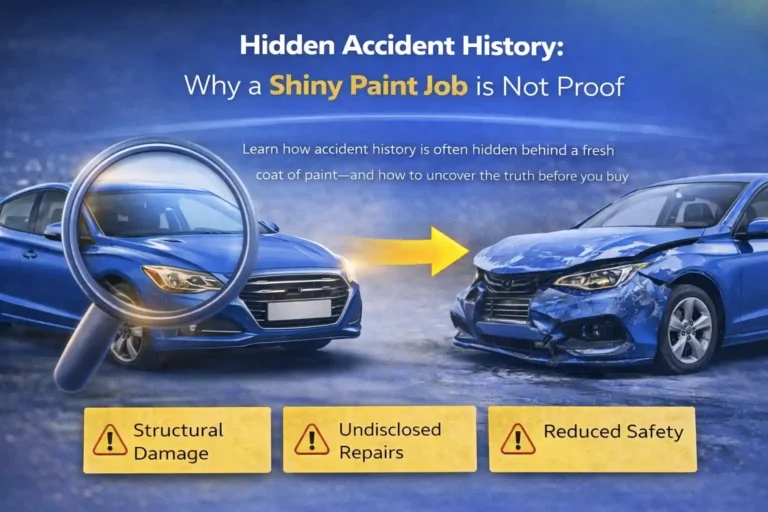
Tires, brakes, leaks, and corrosion do not care about PDFs. A technician translates today’s mechanical reality. If history suggests prior collision, add body-shop eyes (hidden accident history).
Layer four: paperwork
Align title, bill of sale, and disclosures. Liens and duplicate titles are where “great deals” unravel—catch them early.
Mindset
Perfect cars at imperfect prices are fantasies. Good buys are transparent trades of known risk for fair money. Use our checklist to formalize the process.
Closing
CheckVinCode exists to put history-style insight within reach so more buyers can act on facts—not just glossy photos. Verify, inspect, then drive happy.
Keeping records after the sale
Store your report, inspection invoice, and purchase agreement together digitally and physically if possible. When warranty or recall questions appear months later, that folder saves hours of reconstructive stress.
If you sell the car downstream, pass along non-sensitive maintenance records and a fresh report pull when reasonable. Buyers pay for continuity; you benefit from cleaner negotiations.
Lastly, revisit educational articles occasionally—report formats evolve, and refresher reading keeps your eye sharp for the next purchase cycle.