Opening a vehicle history report for the first time can feel like reading a credit file in a foreign language. Dates jump around, abbreviations pile up, and it is tempting to skim for a single word like “accident” and call it done. A more reliable approach is to read in layers: identity, title, mileage, events, then context.
Start with identity and title
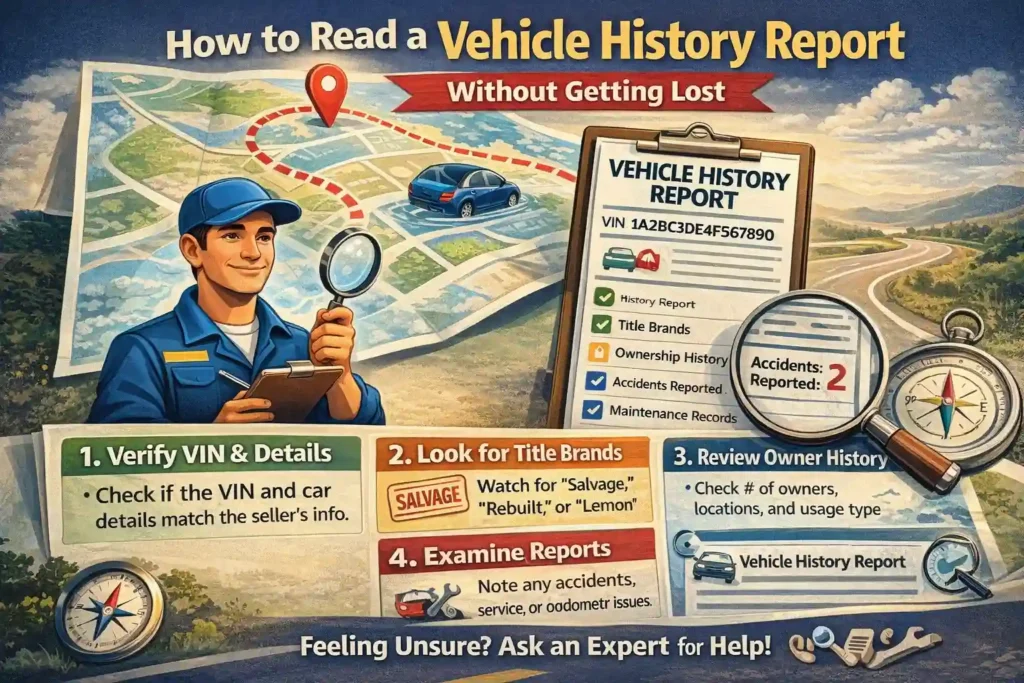
Confirm the VIN on the report matches the vehicle in front of you. Then scan title events: transfers, brands, and the states involved. If you see unfamiliar terms, our title brands in plain language article translates the most common labels buyers encounter.
Mileage: look for a believable story
Odometer readings should generally rise over time. Sudden drops or long gaps without readings are reasons to pause—not automatic proof of fraud, but signals to verify service records and compare wear on pedals, steering wheel, and seats. For a deeper dive, see odometer rollback red flags.
Accident and damage entries
Not every bump becomes a database entry. Conversely, some entries are vague. Use accident flags to guide questions for a body shop or appraiser rather than as a final verdict. Pair this section with a physical inspection focused on panel gaps, paint texture, and glass dates.
What “no record found” means
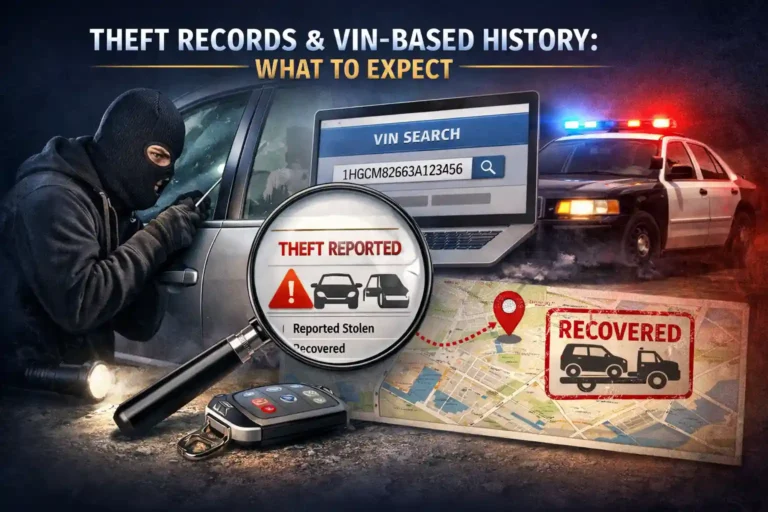
Absence of data usually means nothing was reported to the sources that provider uses—not that the car is guaranteed problem-free. Treat a clean report as a helpful baseline, then layer a mechanical inspection and, when needed, a specialist for flood or theft concerns (flood damage red flags, theft records explained).
Closing habit
Screenshot or save the report when you evaluate a car. If you buy, keep it with your maintenance records. If you walk away, you still have notes for the next listing—patterns teach faster than any single vehicle.
Cross-checking tricky entries
When you see a vague “damage reported” line without context, write down the approximate date and ask whether any panels were replaced near that period. A reputable seller may remember a parking-lot scrape; a dishonest one may over deny. Follow up at inspection with paint-meter readings on multiple panels to establish a baseline—factory paint is usually within a narrow thickness range on the same vehicle.
Also compare registration states with where the car likely lived. Snowy regions mean more road salt; coastal regions mean more humidity in connectors. You are not stereotyping a zip code—you are deciding whether to spend extra lift time on the undercarriage. Small adjustments like that turn a generic report into a targeted inspection plan.
Finally, remember that history providers update asynchronously. If the car was sold at auction last week, your consumer report might not yet reflect every downstream title event. That is another reason to favor sellers who show current title photos and who do not rush you past a verification step.