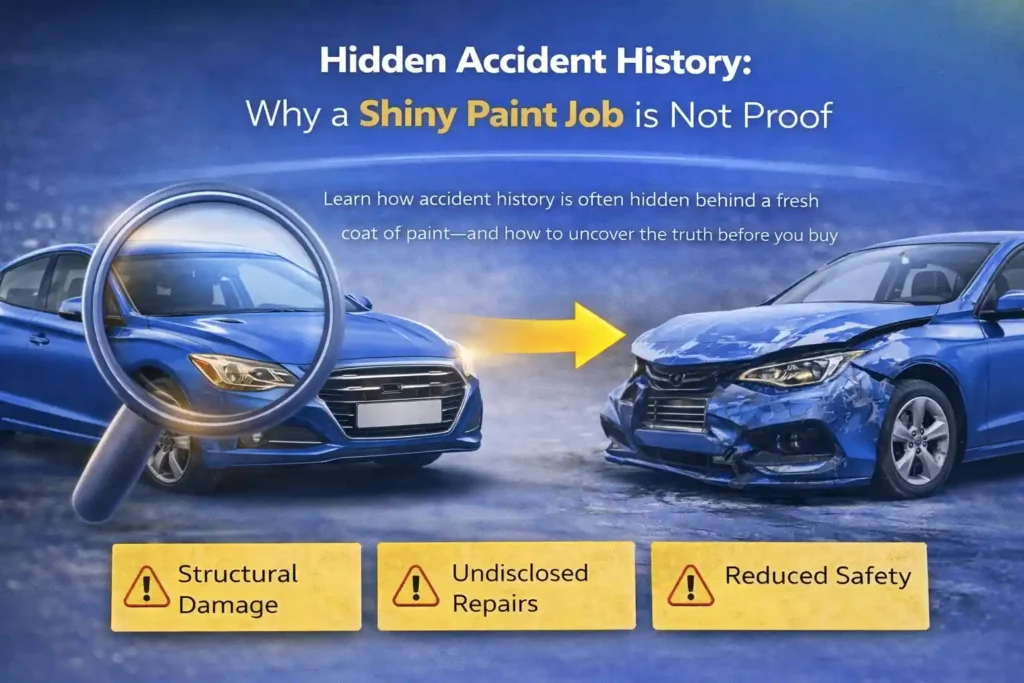
A fresh detail and glossy paint photograph well online, but they are not evidence of a clean past. Accident history in databases depends on reporting: pay-at-the-scene bumps, single-vehicle scrapes, and private settlements often never reach insurers. Your defense is layered: history data, structured visual inspection, and when needed, paint-depth tools or a body shop.
What reports can and cannot catch
Reported collisions with claims are more likely to appear than cosmetic parking-lot taps. A clean report lowers probability; it does not eliminate it. Refresh your reading skills in how to read a vehicle history report and compare with title brands from title brands explained.
Visual inspection checklist
Check panel gaps around hood, fenders, and doors. Look for overspray on rubber seals, mismatched paint texture under direct sun, and sand dust in crevices. Headlamps newer than adjacent panels can hint at front work. Glass etch dates should generally align across the car unless a documented glass replacement exists.
Structural concerns
Strut towers, radiator supports, and rear body panels matter for safety and alignment. If history mentions collision or airbag deployment, pay for a specialist. Airbag module and seatbelt pretensioners are not DIY guesswork.
Negotiation mindset
Documented repairs with invoices can be better than mystery metal—if work was competent. Undisclosed damage is the red flag, not necessarily every prior panel.
Takeaway
Trust, but verify: data plus eyes plus tools beats any single glossy photo.
Using paint meters responsibly
Consumer-grade paint-depth gauges help spot respray bands, but readings vary by panel material (aluminum, steel, plastic) and factory primer systems. Use relative comparisons across adjacent panels rather than chasing universal micron numbers you found online.
Record measurements in a simple note: hood left, hood right, both front fenders, both doors. A single elevated door without corresponding front damage might indicate a side scrape rather than frontal impact—still worth understanding before you buy.
If readings swing wildly without explanation, ask a body professional. Sometimes prior paint correction or factory second-pass paint causes benign variation; other times it hides blend zones from larger repairs.