Buying a used car is almost always a smart way to save money, but it comes with a simple problem: you are inheriting someone else’s story. Paint can be polished, odors can be masked, and a confident seller is not the same thing as an honest history. That is where a VIN check and a closer look at available vehicle history information become practical tools instead of optional extras.
What a VIN actually tells you
The Vehicle Identification Number is not random. It encodes the manufacturer, vehicle type, model year, plant, and a unique serial segment. When you run a check through a reputable service, that number is used to match records from insurers, auctions, motor vehicle agencies, and other sources—where they exist and are reported. Nothing replaces a mechanical inspection, but the VIN is the thread that ties many records together.
Problems you might catch early
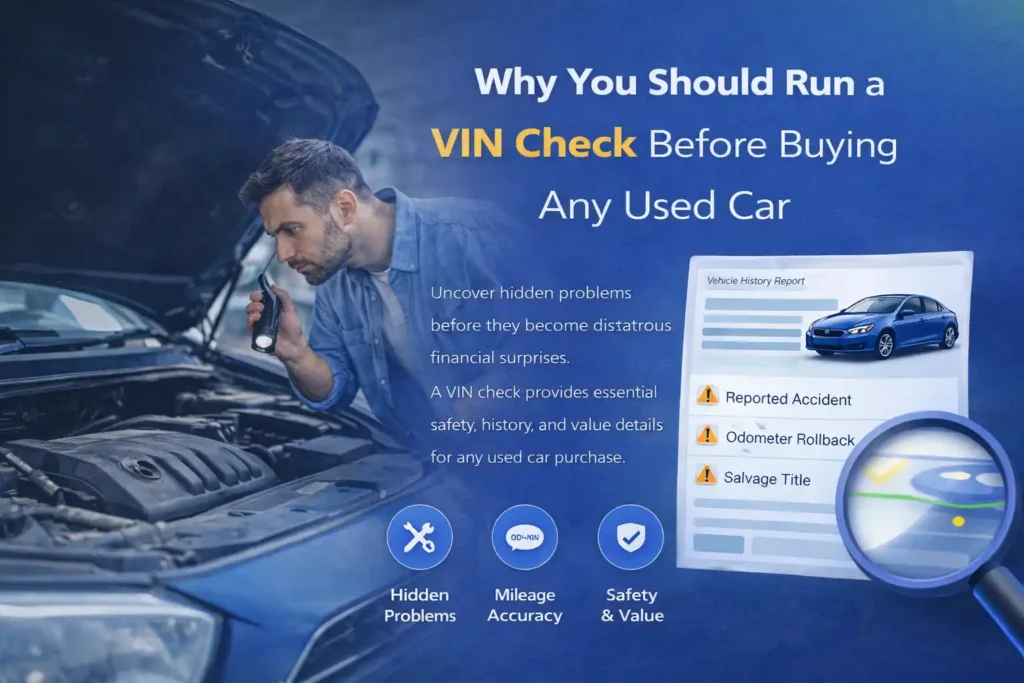
Serious buyers often discover title brands, mileage anomalies, or total-loss indicators before they ever transfer money. Even when a report is clean, that is useful information: it narrows your questions for a technician and helps you focus on wear items the history may never mention—like suspension, brakes, and leaks. If you want a broader view of how reports fit together, read our guide on how to read a vehicle history report.
How this fits into your timeline
The best sequence is simple: shortlist the vehicle, verify the VIN on the door jamb and dashboard match, run your check, then schedule an independent inspection if everything still looks promising. When you are ready to compare what free lookups offer versus fuller files, see free VIN check vs full vehicle history report. At CheckVinCode, we focus on affordable access to history-style data so you can make calmer decisions without overpaying for uncertainty.
Bottom line
A VIN check will not tell you whether the clutch is about to fail, but it can help you avoid cars with hidden title issues, suspicious mileage patterns, or theft flags—before you are emotionally invested. That alone is worth the few minutes it takes.
On the lot: turning data into questions
Bring a printout or phone PDF of anything you pulled beforehand, but stay flexible—new information may appear when you read door stickers, service labels, or dealer window addenda. Ask the seller open questions first (“Has this car ever had insurance work?”) before you reveal what the report says; you learn more from how answers align with records than from a premature data dump.
If you are buying from a dealer, ask whether the report on file is the same VIN you are test driving, and whether they will let an independent shop inspect before a non-refundable deposit. For private sales, meet in daylight, prefer bank parking lots for serious cash discussions, and avoid solo trips to unfamiliar locations. None of this replaces common sense—but it stacks the odds in favor of calm decisions.
When you eventually shortlist two similar vehicles, compare not only price but the quality of transparency: receipts, consistent stories, and willingness to let you verify independently. Cars with cooperative sellers and coherent histories often cost a little more upfront and save far more in surprise repairs later.