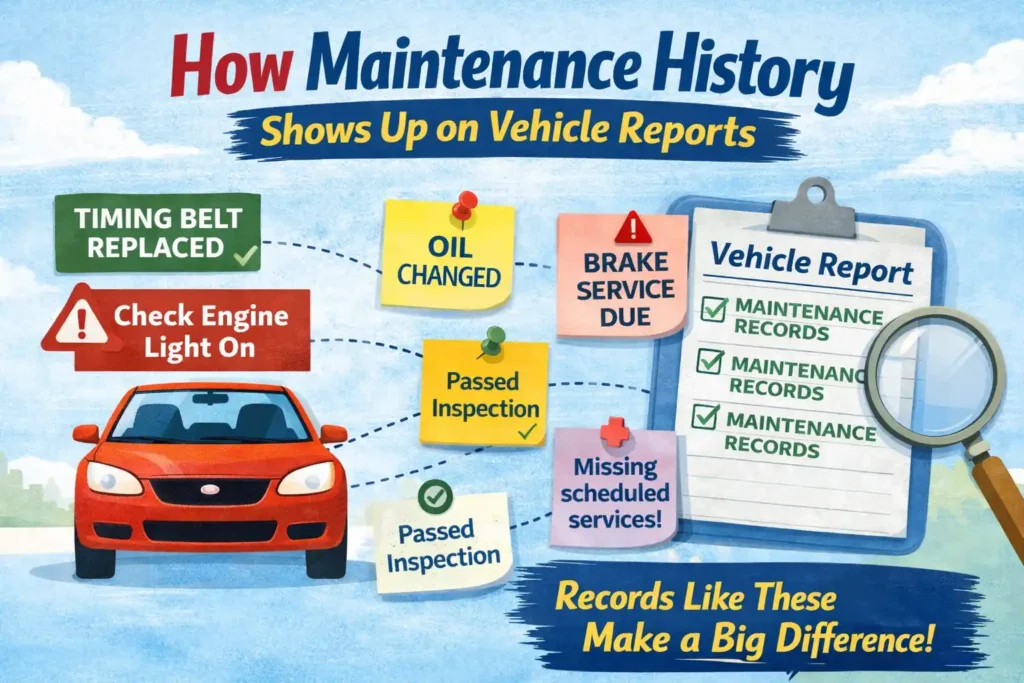
Buyers often expect a vehicle history report to read like a dealership service screen. Sometimes it does—when shops or dealers report to data partners—but many oil changes, brake jobs, and timing services never leave a private garage invoice. Understanding reporting gaps keeps you from confusing “no data” with “no care.”
What commonly appears
Dealer services, some national chains, emissions tests, and warranty-related visits are more likely to surface. Registration renewals may include odometer snapshots that indirectly support a maintenance timeline. Use those points to anchor your questions.
What often stays invisible
DIY work, independent mechanics who do not report, and cash transactions may leave no trail. That is normal, not suspicious—unless the seller claims exhaustive dealer-only care with zero digital footprint. Then ask for proof.
How to fill the gap
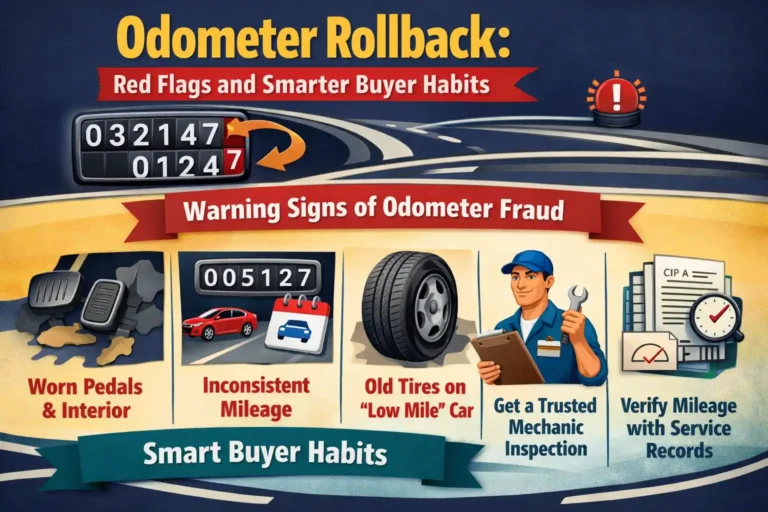
Request a folder of receipts, look for VIN-printed invoices, and compare dates to mileage. On the lift, a technician can estimate whether consumables (brakes, tires, fluids) align with the odometer. Combine with rollback awareness from odometer rollback red flags.
Interpreting “no maintenance records”
Treat it as unknown, not positive or negative. Shift energy to inspection items: leaks, belt age, fluid condition, and pending codes. If the car is newer under factory powertrain warranty, understand what remains transferable.
Closing thought
Maintenance transparency is a negotiation asset. Sellers who organize records often price more firmly—and buyers who review them buy with fewer surprises.
Interpreting incomplete dealer stamps
Some manufacturers embed service menus in portal apps now; paper stamps matter less—but not zero. If the seller shows only recent dealer visits, ask about independent work during earlier years. Gaps are fine if explained (DIY owner, moved states, lost folder).
For turbocharged or timing-belt engines, verify whether critical interval services happened near manufacturer windows even if they never hit a history database. A single missed belt service can turn a bargain into a parts grenade. Technicians can often judge belt age by cover removal where appropriate.
Hybrid and EV buyers should also track battery health tests when available; those rarely appear on generic history reports but may exist in dealer scan logs. Ask specifically for propulsion-battery state-of-health printouts when purchasing used electrified models.