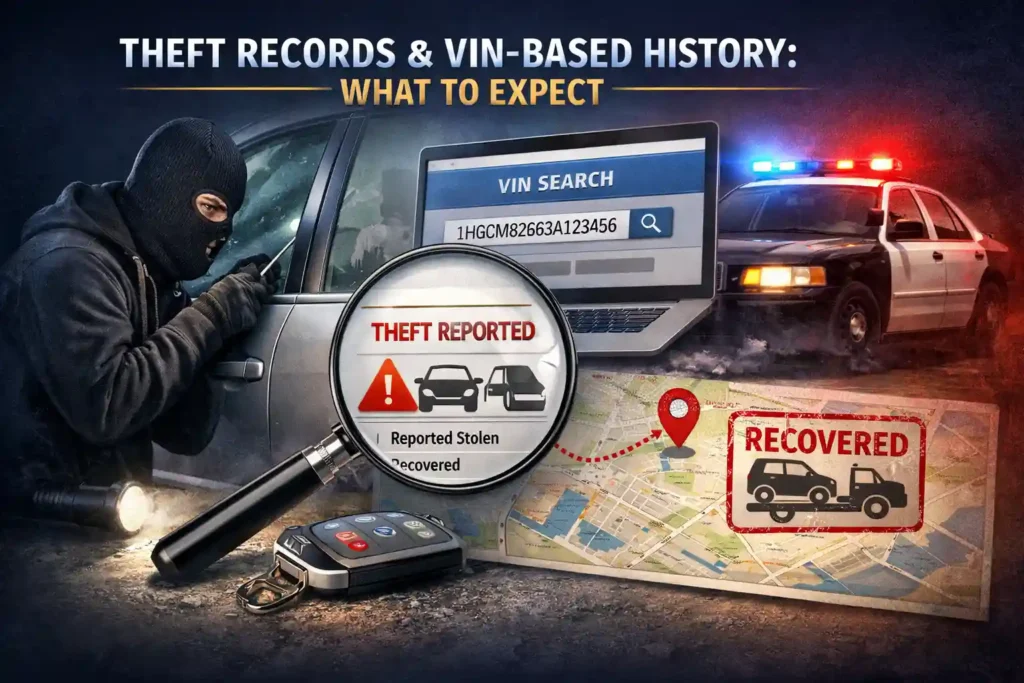
When people hear “theft record,” they often picture a car still hot from a crime drama. Reality is messier: many vehicles are stolen and later recovered, sometimes with minimal damage, sometimes with extensive ones. A VIN-based history check can surface theft-related events when they are reported—understanding what you are seeing prevents both panic and false confidence.
Stolen vs recovered
An active theft flag is obviously serious: stop and contact law enforcement or your DMV process before proceeding. A recovered entry may mean the car was found after a claim or police report. The narrative matters: where it was found, how long it was missing, and whether insurance paid out as a total loss (which can affect branding).
Why timing and jurisdiction matter
Not every agency reports to every consumer database at the same speed. A very recent recovery might lag. Conversely, old events should be documented with resolutions. Compare the report timeline with title transfers and registration history in how to read a vehicle history report.
Physical VIN verification
Check the dashboard VIN through the glass, the door-jamb sticker, and (where accessible) the frame or firewall stamp. Mismatches or tamper evidence are non-negotiable walk-away signals. Photograph plates for your records if you proceed to inspection.
Insurance and resale
Some carriers surcharge or exclude certain theft-recovery histories. Ask direct questions early. Also consider how the next buyer will view the story when you eventually sell—documentation helps.
Balanced takeaway
Theft data is one puzzle piece. Pair it with title brands, mileage consistency from odometer habits, and a qualified mechanical review.
Working with law enforcement and DMV timelines
If you encounter an unresolved theft flag, pause the purchase and ask which agency generated the entry. Processing times vary, and clerical errors occasionally attach the wrong VIN to an event. Fixing that is not your job as a buyer—you simply should not pay until status is clear.
Keep copies of any police case numbers the seller provides, but verify them through official channels rather than trusting screenshots. Scammers sometimes fabricate paperwork; real departments can confirm whether a case exists and whether the VIN in question is affected.
Once a car is cleared, ask how the title was reissued and whether any brand changed in the process. Sometimes recovered cars move forward with a clean-looking title in a new state while databases lag; your inspection and paperwork discipline still matter.