Pressure peaks the moment you sit in a finance office or send a mobile deposit. A written checklist slows that moment to the speed of good judgment. Adapt this list to your state’s paperwork, but keep the sequence: verify identity, verify history, verify metal, then verify documents.
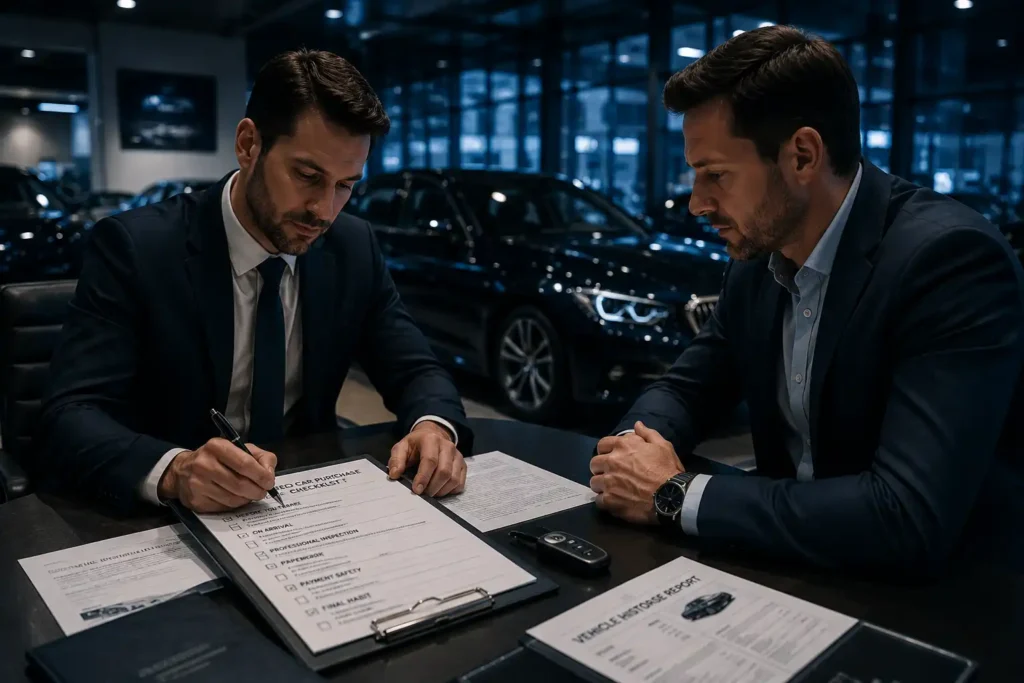
Before you travel
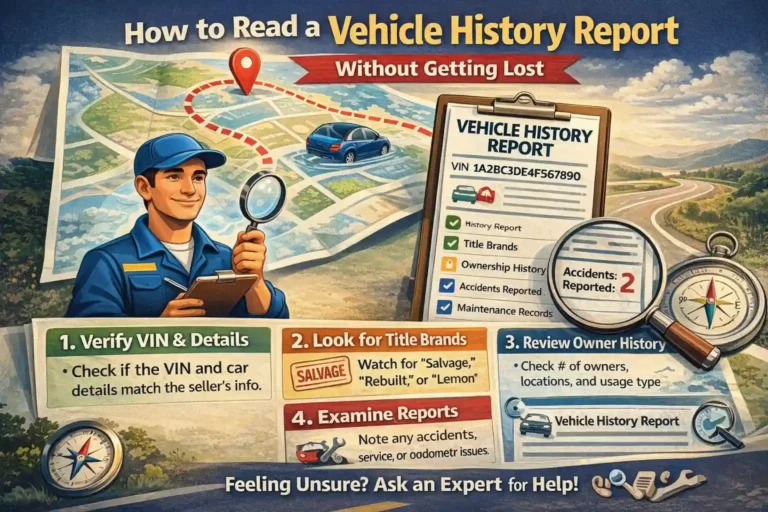
Run a VIN-based review and decode (see free vs full reports). Compare listing photos to report geography hints. Ask for title photos with sensitive info redacted if needed.
On arrival
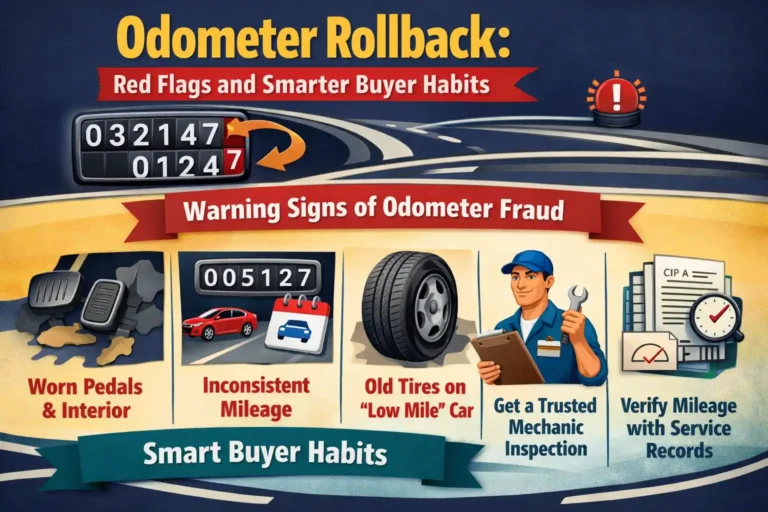
Match VIN tags, confirm seller identity matches title, cold-start the engine, and drive long enough for transmission temperature to rise. Listen for bearing hums, check AC heat, and scan for codes if you bring a reader.
Professional inspection
Budget a shop hour on finalists. Focus areas scale with clues: prior collision (hidden accident history), branded title (title brands), or flood suspicion (flood signs).
Paperwork
Bill of sale with VIN, odometer statement where required, lien release or lender letter, and emissions if local rules demand. Photograph signed copies.
Payment safety
Prefer cleared funds at a bank or DMV-safe location for private sales. Escrow services can help cross-country deals when structured correctly.
Final habit
If one item fails, pause. Cars are replaceable; your savings are not.
Same-day closing without regret
Dealers sometimes compress timelines with “today only” pricing. Your checklist is the antidote: if inspection or title verification is incomplete, the discount is not real savings—it is risk transfer. Politely request written itemization of what must be true for the price to hold tomorrow.
For private sales, avoid night cash handoffs in unfamiliar neighborhoods. Daylight at a financial institution gives both parties witnesses and immediate funds verification. If the seller resists neutral locations, reassess.
After purchase, schedule your first maintenance baseline within a few weeks—even if nothing is “due.” Establishing a relationship with a shop early pays off when questions arise later.