Odometer rollback—making a car appear to have fewer miles than it truly does—remains one of the most expensive scams a private buyer can face. Digital odometers did not end fraud; they changed the tools. The good news is that you can build habits that catch most inconsistencies before money changes hands.
What the history timeline should look like
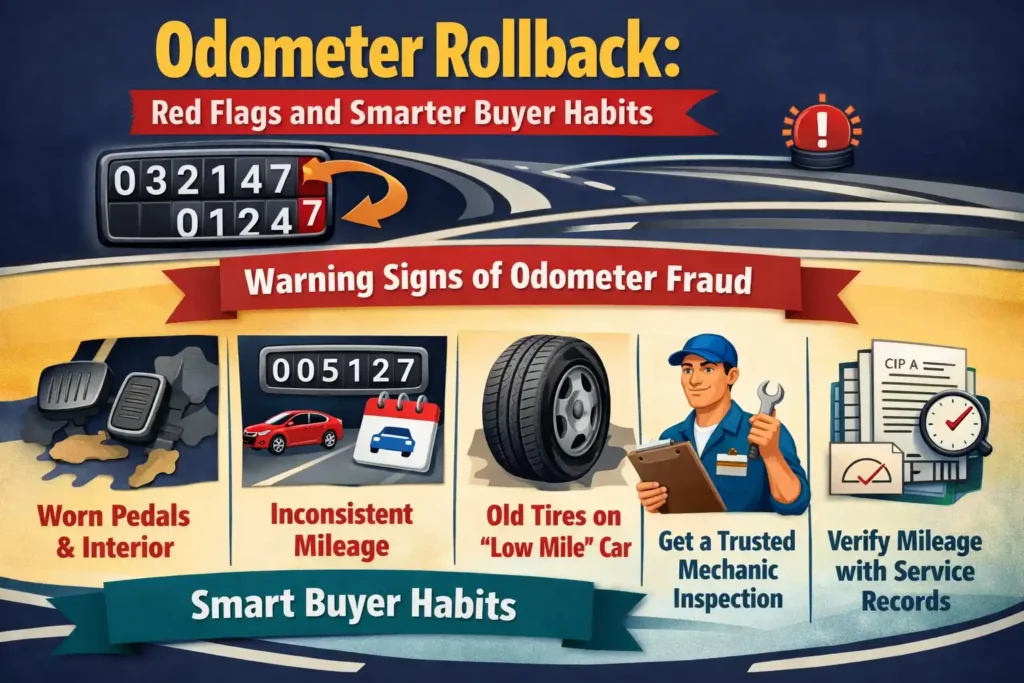
When mileage appears on a title, registration, or inspection record, it should climb steadily. A sudden drop of thousands of miles is a serious red flag. Gaps can be innocent—some states report less often—but they are worth asking about. Compare what you see on paper with the story the seller tells.
Physical wear should match the number on the dash
High-mile cars often show polished spots on interior trim, worn pedal rubber, and shiny steering-wheel leather. Ultra-low miles with heavy wear deserves skepticism. Also compare tire age (DOT week/year) and brake rotor lip to the odometer reading; they will not match perfectly, but wild mismatch is a clue.
Paperwork and service history
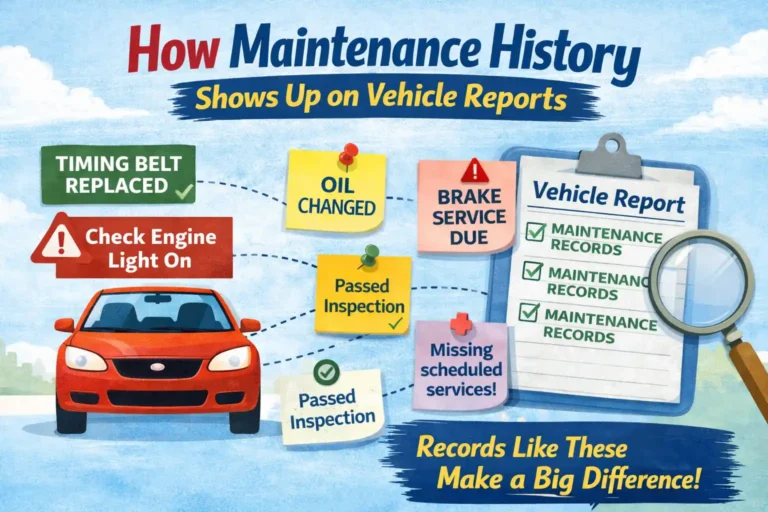
Oil-change stickers, dealer invoices, and warranty paperwork sometimes include mileage snapshots. If the seller claims “all service at one shop,” ask for printouts with VIN referenced. If you are buying from a dealer, compare the buyer’s guide odometer disclosure to the cluster and the report.
How history reports help—and where they stop
Reports only reflect what was reported. A car can be rolled back without leaving a digital trace until the next reporting event. That is why you combine data with inspection. For title context that sometimes pairs with shady mileage, read salvage vs rebuilt title.
Practical takeaway
Never rely on the odometer alone. Cross-check history, wear, and documents. If something feels off, slow down—there will be another listing.
Digital odometers and modern fraud patterns
Digital clusters can be altered with improper tools even though doing so is illegal. That makes the pattern of readings across years more important than any single photograph of the dash. Look for alignment between annual mileage implied by history and realistic yearly driving—roughly 10,000–15,000 miles is common in the United States for daily drivers, but commuters and rural owners vary widely.
When you test drive, reset the trip odometer and note how quickly miles accumulate relative to your route. A cluster that fails to increment can indicate electrical issues—or worse. Pair that observation with any instrument dimming, pixel loss, or warning lights that flicker only sometimes; intermittent electrical faults correlate with past water exposure or poor repairs.
If you plan to keep the vehicle long term, consider budgeting for a pre-purchase scan with a manufacturer-capable tool, not only a generic code reader. Some modules store internal mileage copies technicians can compare when fraud is suspected. That step costs more than a basic scan, but it is cheaper than absorbing a rolled-back car.