Flood damage is notorious for hiding behind shampooed carpets and new floor mats. Electronics corrode slowly, connectors fail intermittently, and musty smells can be masked—temporarily. Buyers who rely only on scent or a quick visual pass are the ones who discover problems weeks after purchase.
What might show in a history report
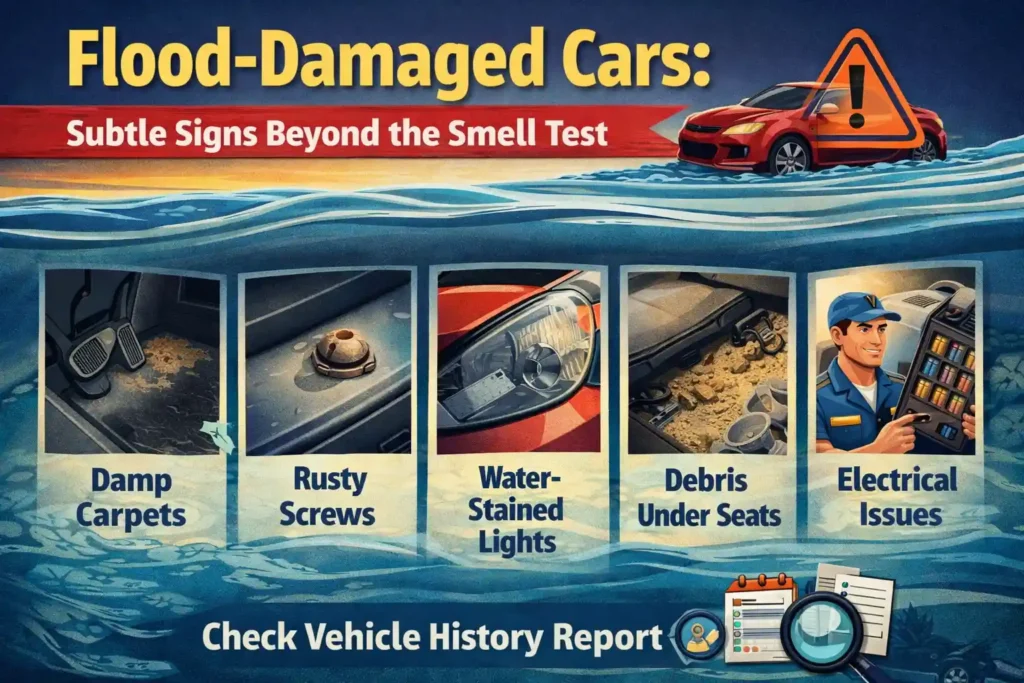
Depending on reporting, you may see salvage or water-related brands, auction announcements, or insurance events. A clean report does not prove a dry past; it proves nothing matching was filed to that database. Always combine data with inspection. Start with our overview of why a VIN check matters before you commit.
Interior clues detailers miss
Pull seatbelt straps all the way out and look for water lines or grime. Peek under spare-tire wells and inside door speaker cutouts. Look for rust on unpainted screws in the cabin and trunk. New carpet in an older car without a clear explanation should prompt questions.
Underhood and underside
Corrosion on aluminum parts, mud in crevices that should stay dry, and fresh anti-corrosion spray on random harnesses can be hints. A lift inspection is ideal: connectors, control modules, and grounds often tell the story first.
Electrical gremlins
Random warning lights, slow windows, and glitchy infotainment after a test drive can indicate moisture damage. Do not assume “just a sensor” when multiple systems misbehave.
Practical approach
If flood risk is plausible for the vehicle’s region or auction path, budget time and money for a shop that knows corrosion diagnostics. When in doubt, pass—electrical repairs scale quickly.
Modern electronics and slow-burn failures
Water damage in a low-voltage harness may not throw codes immediately. Modules can fail months later when corrosion bridges pins. That delayed failure mode is why insurers sometimes total cars with modest-looking water lines—the repair estimate includes many control units and hours of harness labor.
If you still want the car after a cautious inspection, negotiate a warranty buffer: either a short dealer guarantee in writing or personal savings earmarked for electrical gremlins. Keep a dated photo record of the interior and cluster at purchase so you can compare if new stains or corrosion appear later—rare, but useful if disputes arise.
Lastly, remember that musty smell can be temporarily masked with ozone treatments and heavy fragrance. Let the vehicle sit closed in the sun, then reopen doors and sniff before components fully cool. Repeat on a second visit unannounced if you can—patterns beat single impressions.