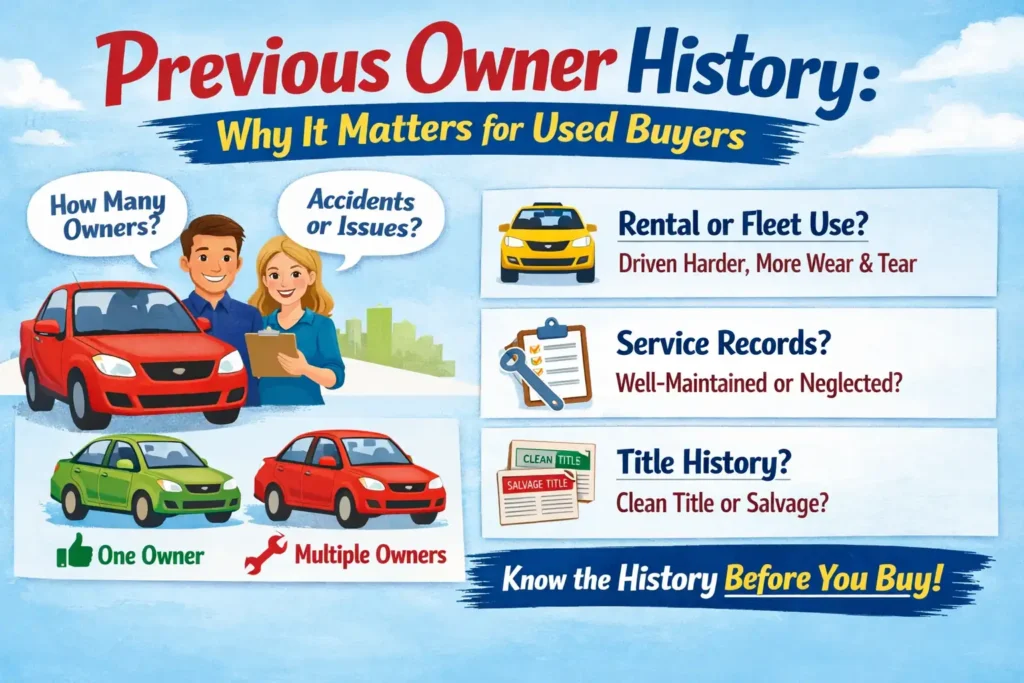
Owner history on a vehicle report is easy to misread. People assume one owner equals pampered garage life, while three owners in two years equals trouble. Sometimes that is true; often it is not. Leases end, people relocate, dealers retitle inventory, and fleets cycle vehicles. The goal is not to score owners like a video game—it is to build a plausible story and test it.
What ownership entries can suggest
Frequent transfers in a short window can indicate problem chasing, or simply a flipper market. Long single ownership with consistent registration states can suggest stable use—but only if mileage and maintenance make sense. Cross-check with service stickers and wear.
Geography and climate
Multiple registrations in snow-belt or coastal states might nudge you toward undercarriage rust checks. It is not a verdict; it is a focus area for the lift. Pair with flood sign awareness if Gulf or hurricane-region patterns appear.
What owner count cannot prove
It cannot prove maintenance quality or accident honesty. A one-owner car might have skipped oil changes; a four-owner car might have meticulous records. Always ask for receipts and compare to the odometer story in reading history reports.
Questions worth asking sellers
Why did you sell? How long have you owned it? Where was it serviced? Inconsistencies between answers and paperwork are more important than the raw owner tally.
Summary
Treat owner history as context that aims your inspection and interview, not as a shortcut to a decision.
Fleet and commercial histories
Corporate registrations can inflate owner counts without implying neglect. Rental and fleet vehicles sometimes show regular maintenance intervals because of policy—yet also higher idle hours or cosmetic wear from many drivers. Ask whether usage was primarily highway or urban delivery; it changes how you evaluate brakes and transmissions.
Dealer “demo” periods may appear as short ownership spans. That is not automatically negative if service was documented and mileage stayed low. The key is whether the story matches the wear you see and the odometer curve on the report.
When in doubt, favor sellers who provide oil analysis or transmission fluid samples on high-mile fleet exits—rare in consumer sales, but valuable when negotiating specialized vehicles like vans or trucks.